Journal · Luxury Resort Video Marketing
Hotel Video Shot List: What to Film, Space by Space and Hour by Hour
A hotel video shot list is the plan that names every shot before the crew arrives, organised so each space is filmed at the hour it looks its best. The most useful way to build it is by space and by time of day: exteriors at first light, interiors through the morning, each room category at its best hour, food and beverage as service begins, and atmosphere at dusk — with a note on what every shot is for in the final cut.
Key takeaways
-
Build the list by space and by hour, not by camera move or gear — the light decides the order.
-
Film exteriors at first light and dusk, interiors through the mid-morning, and dining as service begins.
-
Capture each room category at its best hour, and protect time for human detail, not just wide frames.
-
Note what every shot is for in the cut — hero film, social clip, OTA listing — before the crew arrives.
What a hotel video shot list actually is
A hotel video shot list is a planning document that names each shot a crew will capture and pairs it with a location and a time of day. It is not a wish list of pretty frames; it is a schedule that makes sure the property is filmed in the right light, in a sensible order, with every space and every guest moment accounted for. The difference between footage that looks expensive and footage that merely looks clean usually traces back to this document — to whether someone decided, in advance, when each room would be filmed and why.
The organising principle that works is simple: group shots by space, then slot each group into the hour that space reads best on camera. A lobby photographed at noon and the same lobby caught in low morning light are two different rooms. Planning by space and hour keeps the crew chasing the light through the day instead of backtracking, and it turns an intimidating property into a manageable sequence of setups. This is the same production discipline a full-service luxury hotel video production company brings to any shoot, and it is where the quality of the finished film is quietly decided.
Exteriors and arrival at first light
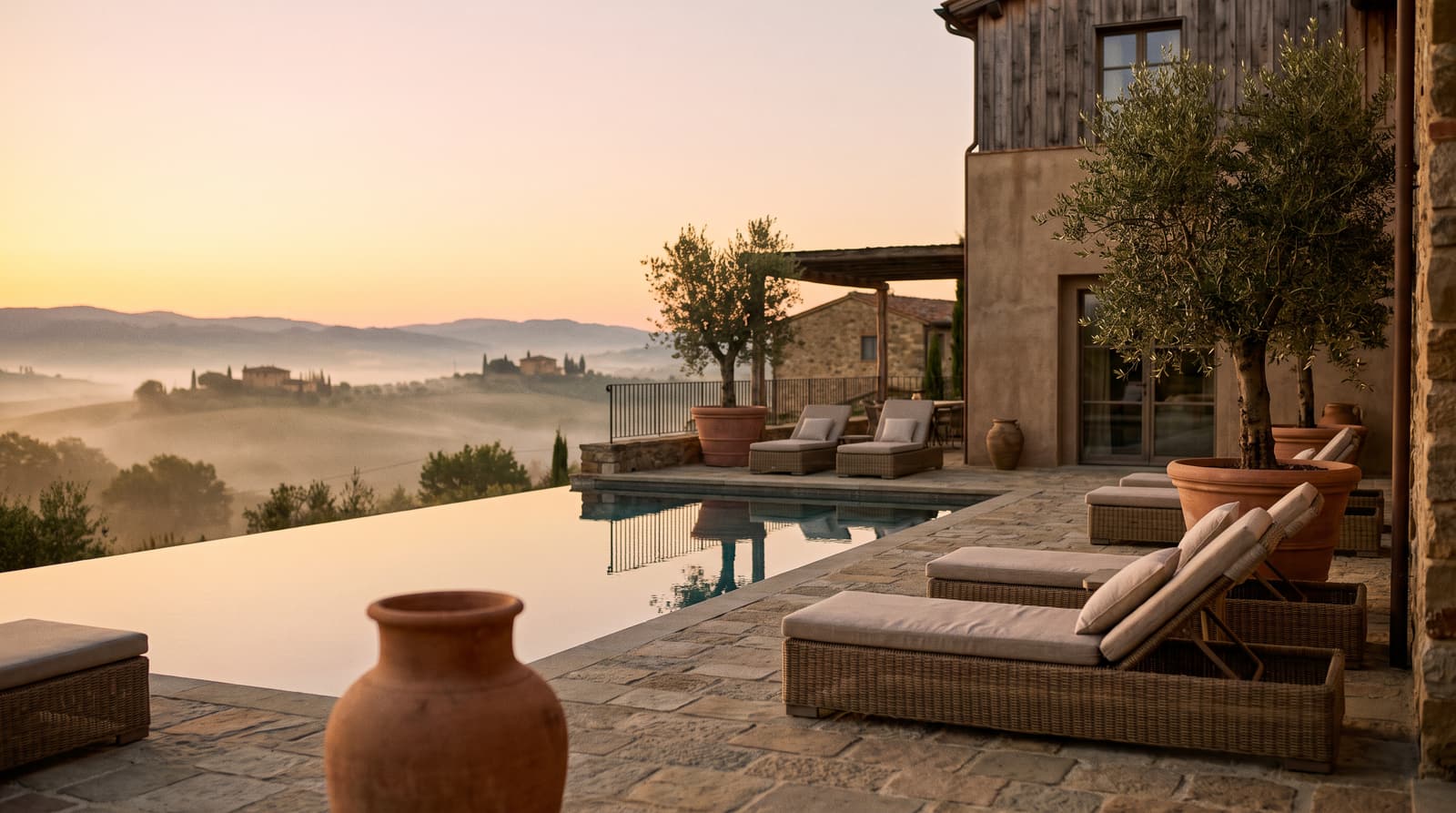
Begin outside, before the property wakes. First light and the blue hour that precedes it give exteriors a calm, exclusive quality that midday sun flattens. The arrival sequence — the approach, the entrance, the first reveal of the facade or the grounds — sets the tone for the whole film, so it deserves the day's best light rather than whatever is left at the end.
- The approach: the road, drive or path in, filmed so the viewer feels they are arriving.
- The facade reveal: the building disclosed from a flattering angle as light rakes across it.
- The grounds at dawn: pools, gardens and terraces empty and still, signalling space and privacy.
- Aerials, where they serve the story: a reveal that lifts to show setting and scale, not a detached flyover.
Interiors through the morning
As the light climbs, move inside. Mid-morning is when most interiors look their best: daylight is soft and generous, and the property is clean and reset before the day's traffic. Work through the public spaces in a logical loop — lobby, lounges, corridors, the spa and wellness areas, the bar before it opens — so the crew moves through the building rather than around it.
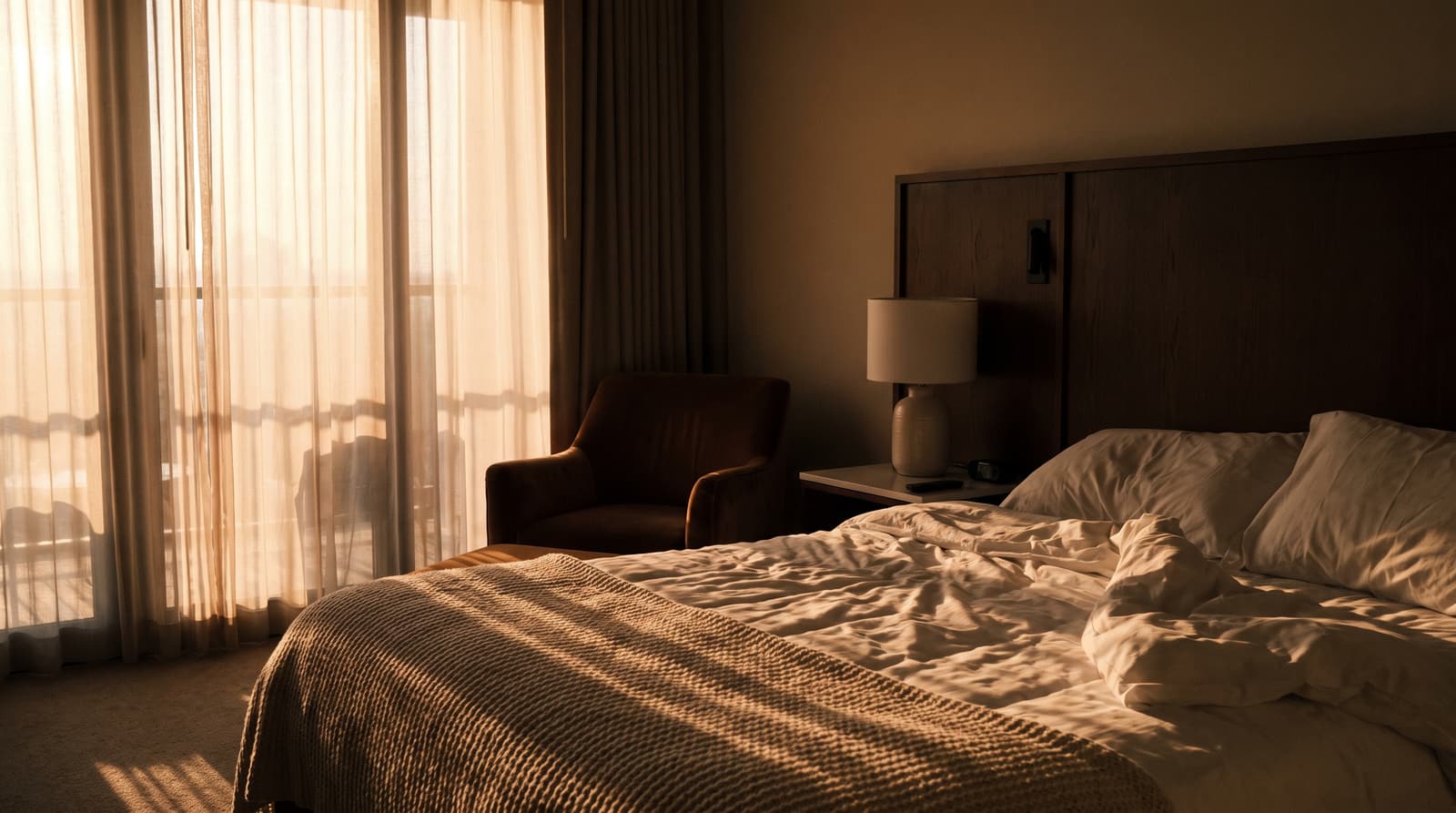
Interiors are where restraint matters most. The temptation is to over-film empty, symmetrical rooms; the footage that actually sells is slower and more selective — a shaft of light across a reading chair, a reflection, a slow push through a doorway. That editorial discipline is the whole subject of our piece on the discipline of restraint in luxury video, and it applies as much to a shot list as to a final edit: choose fewer shots, and give each one a reason to exist.
Guest rooms at their best hour
Each room category earns its own place on the list, filmed at the hour that flatters it. A suite with an east-facing terrace belongs to the morning; a room whose view peaks at sunset should be scheduled for the end of the day. The shot list should name every category the property sells — entry rooms, suites, signature accommodation — so none is left to chance, and it should budget time for the small human beats that make a room feel lived-in rather than staged:
- The first look: the door opening onto the room, filmed as a guest would see it.
- The detail layer: fabric, materials, a turned-down bed, a view framed by the window.
- The ritual: a curtain drawn back, a coffee poured, a balcony door opened to the air.
- The view at its hour: the window or terrace captured when its light is best, not whenever the crew arrives.
Food, beverage and service as it begins
Dining is filmed as service begins, not after. The most persuasive F&B footage is caught in the quiet minutes when a restaurant is set and the first light of service hits the tables — before the room fills, when everything is pristine and intentional. Capture the spaces empty and dressed, then the small rituals that signal craft: a chef plating, a bartender at work, steam rising, hands doing something precise. These are the shots properties most often skip and editors most often need.
Evening, atmosphere and the close
End the day where the day ends. Dusk and the blue hour give a property its most atmospheric frames — warm interiors glowing against a cooling sky, pools and terraces lit, the bar alive. These shots carry the emotional weight of the final film, so the schedule should leave room to wait for them rather than treating them as an afterthought. A single well-timed evening exterior often does more for a hero film than a dozen daytime wides.
A shot list is a schedule for light. Film the right space at the wrong hour and no edit can recover it; film it at its hour and the cut almost assembles itself.
What each shot is for in the cut
A shot list is not only what to film — it is why. Before the crew arrives, every setup should be tagged with its purpose, because a hotel film is never one asset. It is a set of cuts placed where decisions happen: a hero film for the homepage and OTA listing, shorter edits for paid campaigns, and vertical clips for Reels and TikTok. Our overview of what full-service hotel video production delivers walks through how those deliverables fit together; the shot list is where they are made possible or lost.
Practically, that means adding a column. Flag which setups need a vertical frame and a few seconds of self-contained action for social, and which are destined for the hero cut. Note the shots that carry story — arrival, the first look, the evening reveal — against those that are purely establishing. Planning format and purpose at this stage is what lets one production yield a whole content library instead of a single film, a logic we explore further in seven cinematic concepts that move beyond the room tour.
From list to finished film
The best hotel shot lists are specific without being rigid. They name every space and the hour it should be filmed, protect time for human detail and golden light, and tag each shot with its job in the cut — then leave enough room in the schedule to chase the frame the weather or the light owes you. Build it that way and the shoot runs in a logical arc through the day, the property is captured at its best, and the edit has everything it needs. Tell us about your property and the spaces that define it, and we will shape the shot list and the films around them.
Frequently asked questions
What is a hotel video shot list?
A hotel video shot list is the planning document that names every shot a crew will capture on a property, organised so each space is filmed at the hour it looks its best. It pairs location with timing — exteriors at first light, interiors mid-morning, dining as service begins — and notes what each shot is for in the final cut, so nothing essential is missed and nothing is filmed in the wrong light.
How should a hotel shot list be organised?
Organise a hotel shot list by space and by hour rather than by camera gear. Group the shots location by location — arrival, lobby, rooms, spa, dining, grounds — then slot each group into the part of the day when that space reads best on camera. This keeps the crew moving logically through the property, chasing the light instead of backtracking, and makes sure every room category and guest moment is accounted for.
What shots do most hotel videos miss?
The shots most often missed are the human and transitional ones: arrival and the first look at a room, hands and small service rituals, the quiet of a space before guests arrive, and golden- or blue-hour exteriors. Properties tend to over-film empty rooms and under-film the feeling of being there. A good shot list protects time for mood and detail, not just wide establishing frames.
Do you need a separate shot list for social clips?
Not a separate shoot, but a separate column. Vertical clips for Reels and TikTok are cut from the same footage as the hero film, so the shot list should flag which setups need a vertical frame and a few seconds of extra, self-contained action. Planning format at the shot-list stage means one production yields a hero cut, paid-social cutdowns and vertical clips without returning to the property.
Next step
Plan your resort's cinematic film.
See transparent packages and ranges on our pricing page, or tell us about your property and we'll shape a tailored quote.
Craft
Luxury Video Production: The Discipline of Restraint
6 min read · August 23, 2026
Video Marketing
Building a World-Class Film Crew in the Maldives for Luxury Resort Video
6 min read · August 21, 2026
Craft
Hotel Video Production Services: What Full-Service Actually Delivers
6 min read · August 25, 2026